

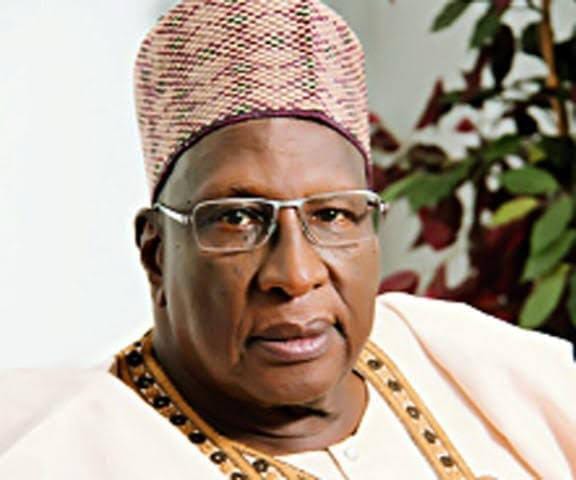
Nigeria is mourning the death of an elder statesman, businessman and politician, Dr.
Bamanga Muhammad Tukur.
Tukur, a prominent figure in Nigeria’s public life for more than five decades, was at various times a public administrator, businessman, state governor, federal minister and national chairman of the Peoples Democratic Party, PDP
As the country remembers his long and consequential career, the Adamawa State Government has declared three days of mourning with all government flags to fly at half-staff.
Born on September 15, 1935, in present day Adamawa State, Dr. Bamanga Tukur grew into one of northern Nigeria’s most recognisable political and business figures.
His career moved between public administration, commerce and politics, giving him a rare vantage point from which to witness some of the country’s most important political transitions.
One of his earliest major national assignments came at the Nigerian Ports Authority, NPA, where he served as General Manager in the 1970s.
Tukur’s tenure at the ports became an important chapter in his public-service career and helped establish his reputation as an administrator with experience in managing major national institutions.
He later moved into politics. In 1983, Tukur became Governor of the defunct Gongola State, an entity that covered what are today Adamawa and Taraba States, in North-East Nigeria.
His tenure was brief as the military coup of December 1983 brought the Second Republic to an abrupt end.
Tukur remained active in national affairs and was later appointed Minister of Industries during the administration of General Sani Abacha in the 1990s.
He also became prominent in the African business community, serving in leadership roles connected with the Africa Business Roundtable and promoting greater private-sector participation in Africa’s economic development.
His political journey eventually brought him to the leadership of Nigeria’s ruling political establishment.
In March 2012, Bamanga Tukur became National Chairman of the Peoples Democratic Party, Nigeria’s then governing party.
His tenure came during one of the most turbulent periods in the party’s history.
Internal disagreements, competing political interests and growing tensions within the PDP eventually overshadowed his leadership, and he stepped down as national chairman in January 2014.
As Nigeria reflects on the passing of Bamanga Tukur, attention will now turn to his family, political associates and the wider legacy of a man whose public career spanned military rule, the Second Republic, the return to democracy and the evolution of Nigeria’s Fourth Republic.
(Follow AIT News on WhatsApp, AfricaIndependentTV on YouTube, ait_online on Facebook and X (Formerly Twitter), and officialait on TikTok, Instagram and Threads)
Editor: Terverr Tyav