
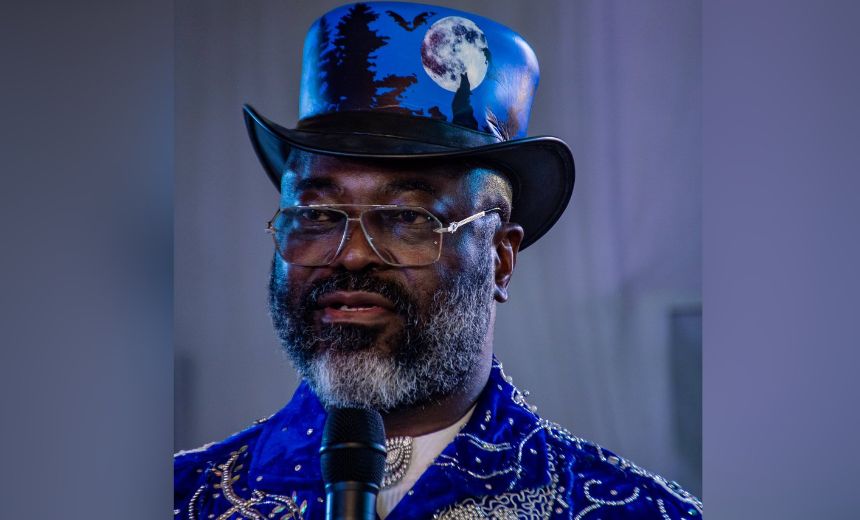
National Democratic Congress (NDC) governorship candidate in Rivers State, Dumo Lulu-Briggs, has explained that his decision to contest the 2027 governorship election is driven by a desire to redirect political power towards public service, economic development and improved quality of life for residents across the state.
In a statement titled “Why I Am Running,” Lulu-Briggs said his ambition is rooted in a sense of duty to Rivers State and a belief that the state’s enormous human and economic potential must be converted into tangible opportunities for its people.
According to him, political disagreements and prolonged conflicts have for too long taken attention away from issues that directly affect the lives of residents, including employment, healthcare, education, infrastructure, security, business development and access to economic opportunities.
He argued that the consequences of political instability go beyond economic figures, noting that delayed government decisions, abandoned or postponed projects, declining public confidence and businesses unable to expand ultimately affect ordinary citizens and communities.
Lulu-Briggs said Rivers State should not be defined by political division, fear or the influence of political godfathers, insisting that government must remain an instrument for serving the people.
“Rivers State belongs to the people,” he stated, stressing that political competition should not translate into violence or permanent hostility among citizens.
The NDC candidate also highlighted the enormous resources and opportunities available to Rivers State, including its oil and gas sector, ports and waterways, agriculture, tourism, culture, creativity, industrial base and the commercial strength of Port Harcourt.
He said the major challenge facing the state is not a lack of resources, but the failure to adequately transform these assets into productive industries, reliable infrastructure, employment, stronger local businesses and improved public services.
It is against this backdrop that Lulu-Briggs said he is proposing what he describes as a “Reset Rivers State” agenda.
He explained that the proposed reset would focus on six major areas: making politics more peaceful and purposeful; building honest, predictable and competent government institutions; diversifying the economy beyond dependence on monthly allocations; expanding opportunities based on work and merit rather than political connections; rebuilding public trust through fairness, transparency and respect for the rule of law; and strengthening environmental protection across the state.
On the economy, Lulu-Briggs said his long-term ambition is to help lay the foundation for transforming Rivers State from its current estimated $20 billion economy into a $200 billion economy within 15 years.
He said such an ambition would require deliberate investment in reliable power, logistics, serviced industrial areas, tourism, agriculture, fisheries, skills development, small and medium-scale enterprises, the creative sector and the blue economy.
The governorship candidate also placed significant emphasis on employment and economic inclusion, saying residents should be able to access work, finance, markets and opportunities without having to depend on political connections.
He further promised that his administration, if elected, would focus on creating the conditions necessary for businesses to grow and for young people to move from training into meaningful employment.
Environmental protection also forms a major part of his proposed agenda. Lulu-Briggs said communities affected by pollution, coastal risks, flooding, unsafe water and inadequate drainage deserve a government capable of providing credible information, effective monitoring, rapid emergency response and practical environmental protection.
He maintained that economic development cannot be considered genuine transformation if it destroys the environment and undermines the conditions necessary for people to live and earn a livelihood.
Lulu-Briggs also stressed that his proposed Reset is not an act of revenge, but an attempt to establish a different culture of governance in Rivers State—one focused on competence, continuity, accountability, measurable results and service to the people.
He said he does not intend to ask Rivers people for a “blank cheque,” but wants his administration to be judged by evidence and tangible improvements in the lives of citizens.
Among the indicators he wants residents to use in assessing his administration, he listed safer politics, stronger public institutions, progress on major development projects, improved conditions for businesses, growth in tourism and the creative sector, better employment outcomes, stronger environmental monitoring and a government that openly communicates what it has achieved, what has failed and what needs to be corrected.
Lulu-Briggs therefore called on Rivers people to see the 2027 election as an opportunity to return political power to its fundamental purpose—service to the people.
He urged citizens to choose what he described as purpose over political capture, work over noise, competence over conflict and prosperity over poverty.
“Rivers State belongs to the people. It needs a Reset,” he declared, as he asked residents across the state to trust him with the opportunity to serve.
He concluded by expressing his determination to build a Rivers State where every community, regardless of location or background, can feel seen, heard, respected and adequately served by government.