

Nigeria’s medical brain drain remains a severe crisis in 2026 as the United Kingdom’s General Medical Council reports that an estimated 20,966 health workers relocated abroad within one year.
To address the situation which exposes Resident Doctors to burn out, reduced work efficiency and putting postgraduate training under pressure, some health experts are advocating for more implementation of the auto replacement system for emigrating professionals commonly known as One-To-One Replacement Policy.
One of the earliest policies introduced by the Federal Government to address the brain drain challenge is increased training and enrollment in medical schools across the country.
Despite the increased number of specialists now produced on a yearly basis, the percentage of those going abroad seems to be on the rise.
MUST READ: Bereaved Police Families Receive N64.9m In Akwa-Ibom, Plateau States
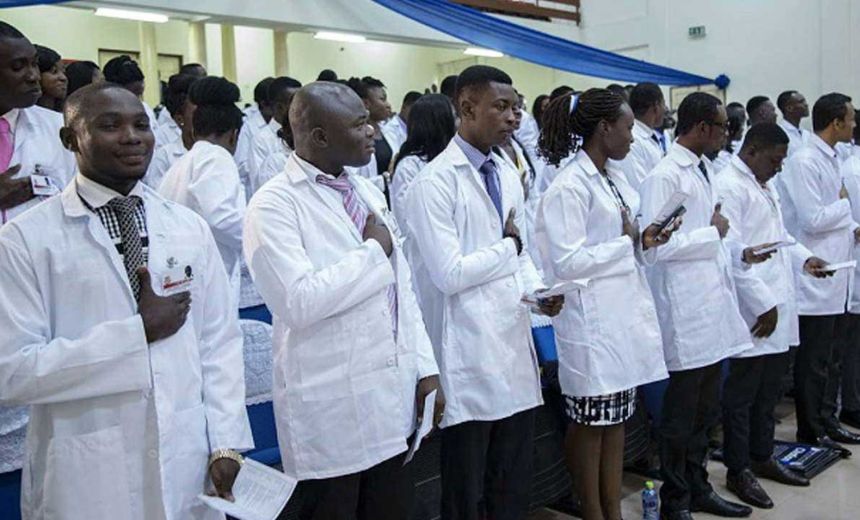
For Instance, the National Postgraduate College of Nigeria, NPMCN produced 595 professionals during its 44th convocation in 2026, but not many are sure to stay back home.
Amidst rising legal cases as it relates to patients care and their rights, Director-General of the Nigerian Institute of Medical Research, NIMR, Professor John Obafunwa urged Doctors to improve on documentation, obtain informed consent and prompt report of errors to reduce medical negligence.
Professor Obafunwa also advocated protected research time for clinicians, joint appointments between universities and NIMR formal mentorship
(Follow AIT News on WhatsApp, AfricaIndependentTV on YouTube, ait_online on Facebook and X (Formerly Twitter), and officialait on TikTok, Instagram and Threads)
(Editor: Terverr Tyav)