
The division within organised labour in Nigeria over the Federal Government’s new wage intervention took centre stage at the 2026 Annual Labour Conference in Abuja.
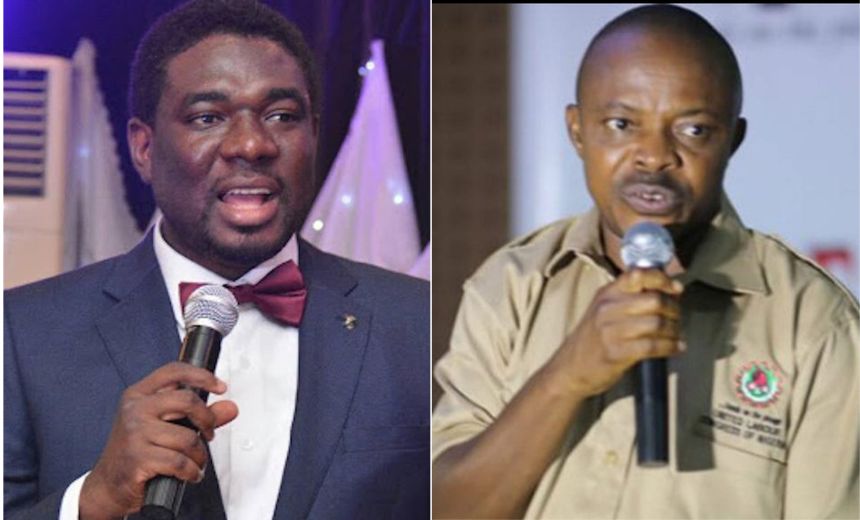
Representatives of both the Nigeria Labour Congress, NLC, and the Trade Union Congress, TUC, at the event openly buttressed the opposing positions of their leaders, setting the tone for a dramatic war of words that later played out on national television between NLC President Joe Ajaero and TUC President Festus Osifo.
The conference with the theme: “The Future of Work: Minimum Wage, Economic Reforms and 2027 Elections,” opened with hard talks over economic reforms and next year’s elections.
The NLC delegation led by Chris Onyeka defended the seven-point accord reached with the Federal Government on Tuesday, October 27 describing the N70,000 transport intervention for six months and the payment timelines for peculiar and health workers’ allowances as immediate relief won through negotiation.
For the TUC represented by President of the Petroleum and Natural Gas Senior Staff Association of Nigeria (PENGASSAN), Bosun Olabiyi-Agoro, such awards were temporary palliatives that had failed in the past. TUC insists that its demand for an immediate salary increase to N300,000 for the least paid worker remains the only sustainable solution.
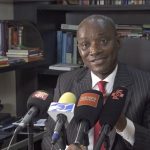
Hours after the conference, the disagreement escalated on live television. Ajaero, appearing on one network, described the TUC’s rejection as unrealistic and argued that the NLC secured enforceable commitments, including constitution of the National Minimum Wage Negotiation Committee, payment of peculiar allowance arrears in three instalments from November, and redemption of 19 months arrears for health workers from December.
MUST READ: 26.8m People In Hunger Crisis Across 26 States, FCT – UN Report
He maintained that labour could not leave workers with nothing while waiting for a protracted minimum wage process and that the agreement to reconvene in one month to appraise implementation showed that negotiations were still ongoing.
Festus Osifo on the other hand, appearing on another prime-time programme fired back, describing the N70,000 wage award as a repeat of the failed N35,000 wage award of October 2023, which he said was never implemented holistically, with some federal workers still owed and over 80% of states and the informal sector failing to pay.
Osifo argued that there is no maximum wage law in Nigeria and that the Federal Government could raise salaries immediately with consequential adjustment, as some states already pay above N100,000 as minimum wage, rather than hide behind wage awards.
What started as policy debate soon degenerated into open name-calling, with both presidents questioning each other’s credibility, negotiating strategy and claim to speak for Nigerian workers, forcing programme anchors to intervene repeatedly to restore calm.
The exchanges, which featured strong language and personal accusations over who wanted a contract from CNG or not and who legitimately speaks for Nigerian workers, have drawn concern from affiliate unions who fear the public rift could weaken labour’s bargaining strength ahead of the minimum wage talks.
(Follow AIT News on WhatsApp, AfricaIndependentTV on YouTube, ait_online on Facebook and X (Formerly Twitter), and officialait on TikTok, Instagram and Threads)
(Editor: Terverr Tyav)