

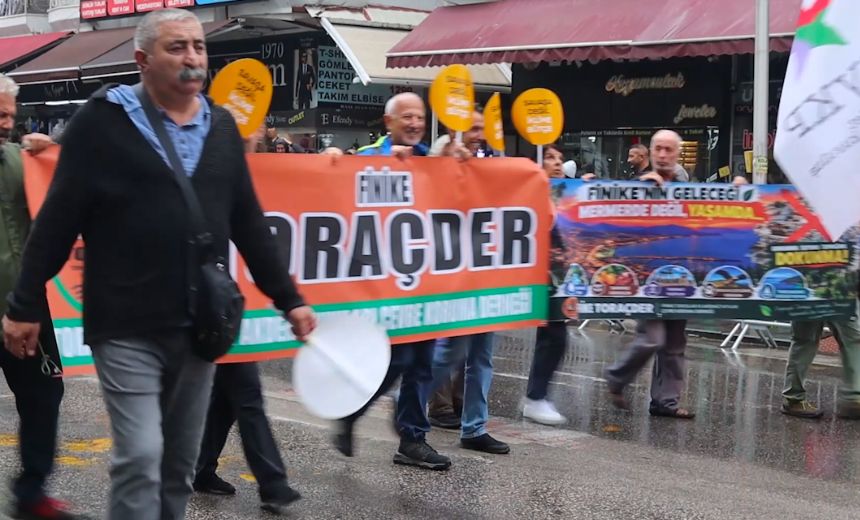
As climate negotiations continue behind closed doors at COP31 in Antalya, Türkiye, civil society organisations from across the world have taken their demands to the streets, staging a Global People’s March in the historic ancient town of Antalya.
The protesters are calling on world leaders to move beyond promises and take urgent, concrete action to protect vulnerable communities from the devastating impacts of climate change.
Chanting for climate action in different languages, carrying placards and united by a common demand for climate justice, the protesters brought the streets of Antalya to life with a message for world leaders attending COP31.
Although excluded from the negotiating rooms where decisions on the future of the planet are being made, these civil society groups insist their voices must count.
From demands for climate finance and an end to fossil fuel exploration to calls for big polluters to pay, their message was unmistakable: climate action cannot wait.
The protesters also questioned the growing presence and influence of fossil fuel companies at climate negotiations, arguing that allowing major polluters a seat at the decision-making table risks weakening commitments to move away from fossil fuels.
One of the most striking displays was an effigy of United States President Donald Trump, depicting him sitting on the back of a smaller man while offering help without getting off his back.
The symbolism was a protest against Trump’s decision to withdraw the United States from the Paris Climate Agreement, with demonstrators questioning how one of the world’s largest historical greenhouse gas emitters could retreat from global climate commitments while vulnerable nations continue to bear the consequences.
For African civil society organisations participating in the march, the climate crisis is also a question of inequality and survival.
They drew attention to the disproportionate impact of climate change on women, children and young people across the continent, insisting that communities least responsible for global emissions should not be left to shoulder the greatest burden.
A major demand was climate finance in the form of grants rather than loans, arguing that forcing already vulnerable developing countries to borrow to address a crisis they did little to create only deepens their economic challenges.
As negotiations continue within the conference halls, the Global People’s March serves as a reminder that climate decisions must reflect the realities of people beyond the negotiating table.
“This story was produced as part of the COP31 Climate Change Media Partnership, a journalism fellowship organised by Internews’ Earth Journalism Network, Informed Earth and the Stanley Center for Peace and Security”
(Follow AIT News on WhatsApp, AfricaIndependentTV on YouTube, ait_online on Facebook and X (Formerly Twitter), and officialait on TikTok, Instagram and Threads)
(Editor: Terverr Tyav)