

The first week of negotiations at the ongoing COP31 climate summit in Antalya, Türkiye, has produced an 18-page draft decision text outlining some of the key issues expected to shape the final outcome of the conference.
The 144-paragraph document, prepared under the joint leadership of the Turkish COP31 Presidency and Australia’s President of Negotiations, Chris Bowen, contains far-reaching proposals on fossil fuel transition, climate finance, methane emissions and global electrification.
Among its most significant proposals is a call for accelerated action to phase out fossil fuels, including an immediate transition away from fossil fuels in energy systems.
If adopted, this would represent a push beyond the language agreed at COP28.
The draft also proposes increasing electricity’s share of global final energy demand to 35% by 2035, alongside a call to triple adaptation finance for developing countries to at least $120 billion annually by the same year.
Other proposals include eliminating routine gas flaring and venting from oil wells, addressing the prospect of global temperatures temporarily exceeding the 1.5-degree Celsius threshold, and strengthening the scientific evidence needed to guide future climate action.
The text also raises concerns about unilateral climate-related trade measures, including carbon border tariffs, which some countries argue could restrict access to green technologies and undermine equitable climate action.
One issue attracting particular attention is the projected overshoot of the 1.5-degree Celsius temperature threshold.
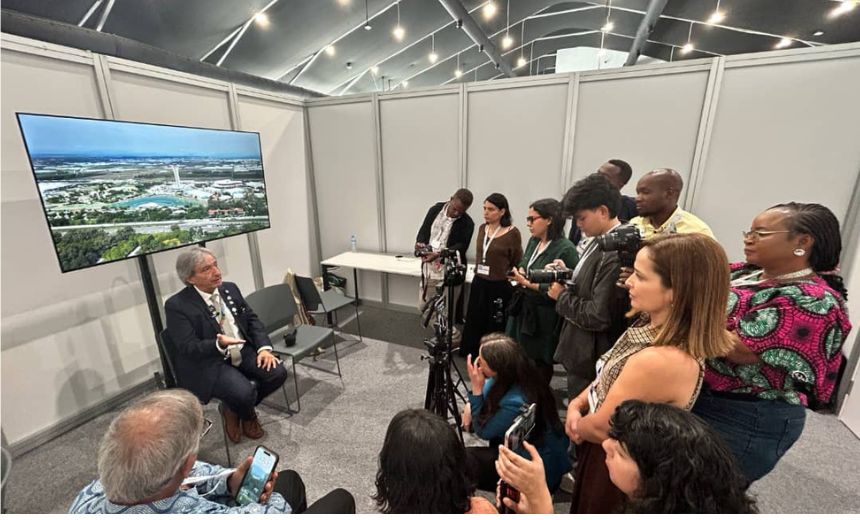
Speaking to CCMP Fellows, Manuel Pulgar-Vidal, President of the 2014 UN Climate Change Conference, COP20, and WWF’s Global Leader for Climate and Energy, says the possibility of overshooting the threshold has long been anticipated because of the current trajectory of global emissions.
“It is important to remind us that we knew from the beginning the overshoot will happen. We knew that because of the trajectory of the emissions, the overshoot could happen. And unfortunately, it is most likely that it will happen.
But by recognising the overshoot, what we have to always remind ourselves, and this is a positive side, is that we have clarity that we cannot exceed or over-exceed temperature rising more than 1.5.”
Pulgar-Vidal stresses that the prospect of temporarily exceeding 1.5 degrees Celsius must not become an excuse for abandoning the global temperature goal.
He argues that countries must instead raise their climate ambitions, accelerate emissions reductions and strengthen efforts to achieve net-zero emissions across both public and private sectors.
He also describes climate change as a systemic challenge with far-reaching consequences for agriculture, economies, employment and livelihoods, requiring equally systemic solutions.
Beyond the scientific and emissions questions, the draft decision also brings climate finance and the just transition debate into sharper focus, particularly for developing countries seeking the resources to move towards cleaner energy while protecting vulnerable communities and livelihoods.
The proposed $120 billion annual adaptation finance target is therefore likely to be a major negotiating point, especially as developing nations continue to demand predictable and accessible funding to respond to worsening climate impacts.
However, translating these proposals into an agreed outcome will depend on the willingness of countries to bridge their differences.
With decisions under the UN climate process requiring consensus among nearly 200 parties, Australia’s President of Negotiations, Chris Bowen, has acknowledged that the draft deliberately contains contentious provisions to compel countries to negotiate compromises ahead of the November 20 deadline.
As COP31 enters its decisive second week, attention now shifts from competing proposals to the difficult task of building consensus.
Whether the final decision delivers stronger commitments on fossil fuel transition, adequate climate finance and a credible pathway to limiting global warming to 1.5 degrees Celsius will be a critical measure of the conference’s success.
“This story was produced as part of the COP31 Climate Change Media Partnership, a journalism fellowship organized by Internews’ Earth Journalism Network, Informed Earth and the Stanley Center for Peace and Security”
(Follow AIT News on WhatsApp, AfricaIndependentTV on YouTube, ait_online on Facebook and X (Formerly Twitter), and officialait on TikTok, Instagram and Threads)
(Editor: Terverr Tyav)