

The global perception of Nigeria’s creative industry has gone beyond a source of entertainment but something much bigger.
From music and film to fashion, food, literature, technology and intellectual property, the sector is emerging as a major commercial opportunity, and the Federal Government wants Nigeria to capture a bigger share of the value it creates.
For decades, the creativity of Nigerians have travelled far beyond the country’s borders.
But behind the global visibility is a bigger economic question:
How much of the wealth generated by Nigeria’s creative talent actually stays in Nigeria?
That is the challenge the Federal Government says it wants to address.
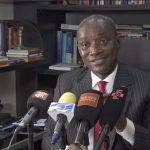
At a joint ministerial briefing ahead of CANEX WKND 2026, the Minister of Industry, Trade and Investment, Jumoke Oduwole, said the global economy is changing rapidly, with value increasingly coming from services, technology, content and intellectual property.
She said Nigeria must move beyond simply producing creative content and focus on building the financial, technological and intellectual-property structures required to commercialise that creativity.
The argument is straightforward.
Talent alone does not create a globally competitive creative economy.
Creators need access to finance. Businesses need investment. Intellectual property must be protected and commercialised. And Nigerian products need access to international markets.
CANEX WKND is being positioned as a meeting point for these different interests.
For the Minister of Arts, Culture and the Creative Economy, Hannatu Musawa, the potential is even bigger.
She says government’s baseline mapping of the creative economy indicates that the sector could contribute at least one hundred billion dollars to Nigeria’s economy.
But unlocking that potential, she says, requires deliberate government support and stronger structures around an industry that has largely developed organically.
The creation of the Ministry of Arts, Culture and the Creative Economy is part of that strategy.
The objective is not only to support artists and entertainers, but to build an economic framework around creativity, one capable of generating jobs, attracting investment, expanding exports and strengthening Nigeria’s influence beyond its borders.
(Follow AIT News on WhatsApp, AfricaIndependentTV on YouTube, ait_online on Facebook and X (Formerly Twitter), and officialait on TikTok, Instagram and Threads)
Editor: Ada Ononye