

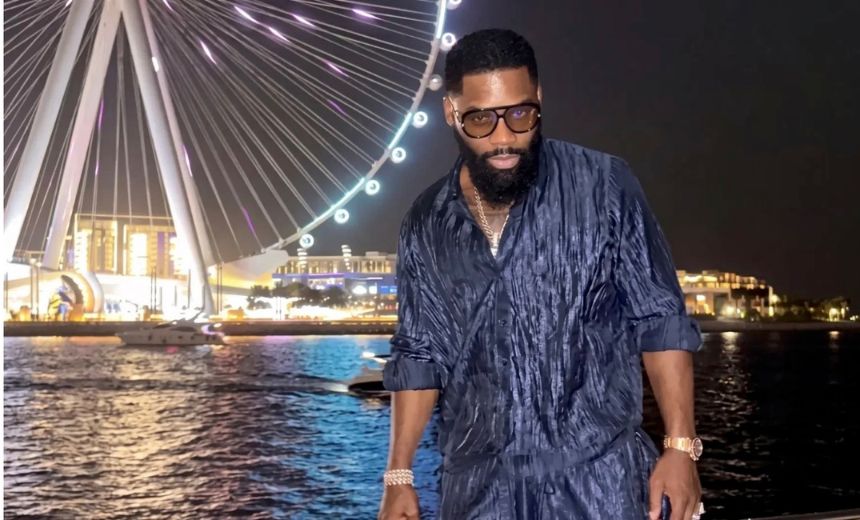
A man dies after seeking a larger penis, and the internet laughs. The jokes followed quickly after reports emerged of the death of Igho Ubiribo, a 43-year-old Nigerian-British businessman and social media influencer, following a penile enlargement procedure during a holiday in Thailand.
His death was reportedly linked by a UK coroner to a fatal pulmonary embolism after injections into his penis.
There is something revealing about the cruelty that followed. Had Igho died after a breast augmentation, liposuction or Brazilian butt lift, there would undoubtedly have been gossip.
But there would also have been sympathy. We have, after all, become familiar with the emotional vocabulary surrounding women’s cosmetic procedures: body insecurity, beauty standards, pregnancy, ageing, trauma and social pressure.
For Igho, there were jokes about his masculinity. It forces us to confront an uncomfortable question: why do we recognise bodily insecurity as human when it belongs to women, but turn it into comedy when it belongs to men?
The ghost hovering over this conversation is Stella Obasanjo. Nigeria’s former First Lady died in 2005 following complications from cosmetic surgery in Spain.
Her death was a terrible reminder that elective procedures are not trivial merely because they are chosen. A decision to alter one’s body can carry the same medical risks as any other invasive intervention. Desire does not cancel danger.
But neither does danger cancel autonomy. That distinction is crucial. For years, women across the world have altered their bodies in pursuit of beauty, confidence, recovery or acceptance.
They have undergone breast reductions and augmentations, liposuction, tummy tucks, skin-tightening procedures and Brazilian butt lifts.
Some seek surgery after childbirth because stretch marks, loose skin or changes to their bodies leave them feeling alienated from the person they once knew.
Others make choices that are more intimate.
In many societies, women are encouraged, subtly and sometimes openly, to remain sexually desirable for men.
Even products marketed as kayan mata are wrapped in the language of femininity and pleasure, though much of the industry ultimately revolves around satisfying male desire.
We may disagree with these choices. We may question the industries that profit from insecurity. We may worry that social media has turned ordinary bodies into unfinished projects.
But most of us understand one fundamental principle: a woman has agency over her own body.
That principle should not suddenly disappear when the body belongs to a man.
A man may feel insecure about his height, his hair, his weight or his penis. He may carry that insecurity silently for years because masculinity has taught him that vulnerability is embarrassing. Men are expected to perform confidence even when they do not feel it.
They are expected to laugh at their own anxieties before somebody else does.
And silence has consequences. When men cannot ask embarrassing questions in ordinary conversation, the internet answers for them.
They encounter exaggerated claims about what counts as a ‘normal’ penis, what women supposedly want, what pornographic performers possess and what some miracle product can supposedly deliver. The quieter the conversation becomes, the louder the misinformation gets.
The result is a strange economy built around male doubt. Pills, oils, pumps, exercises, injections and procedures are marketed into that uncertainty.
Some are merely expensive; others are medically dubious or actively dangerous.
The sales pitch is often remarkably simple: you are not enough as you are, but you could be– if you buy this.
The irony is that the evidence is usually far less sensational than the internet and urban mythology.
The average male has an average penis. Many men who worry that they are too small are, in fact, within the normal range. Some may even be larger or thicker than average. Pardon my immodesty.
The problem begins when the reference point moves from anatomy to fantasy. Pornography is not a measuring instrument. Sex toys are not anatomical standards.
A carefully selected photograph, a boast from a stranger online or an advertisement promising impossible transformation is not a medical benchmark.
Yet imaginary standards can produce very real injuries.
A patient once presented after inserting a locally made metallic ring around his penis, presumably to increase its girth. His penis did indeed become thicker –but not in the way he intended. The apparent enlargement was progressive swelling. The ring impaired venous and lymphatic drainage, trapping blood and fluid in the tissue. As the swelling increased, the ring became tighter, further compromising circulation. The erection became painful and would not subside. He eventually had to be rushed to an emergency room, where urologists decompressed the penis and removed the ring.
There is something almost tragic in the literalness of that story: the man got the enlargement he was chasing, but his body achieved it by becoming injured.
So perhaps we need to talk about these things more. Talking about penile insecurity does not make us immodest. It does not have to be crude, sensational or designed for shock. It can be a conversation about sexual health, body image, informed consent and medical literacy. Silence is not sophistication when misinformation is doing the talking.
That does not mean every insecurity requires surgery.
It certainly does not mean every clinic offering enhancement should be trusted. But ridicule is not a medical argument.
The more important question is whether the procedure is medically appropriate, properly regulated and carried out by qualified professionals.
People have the right to pursue enhancements to their bodies, provided those interventions are medically sanctioned, evidence-based and performed under rigorous standards of care. That should be the centre of the debate.
The first responsibility lies with medicine.
Cosmetic and enhancement procedures should not operate in a marketplace where desperation meets advertising and hope meets a syringe. Patients deserve honest assessments of benefits and risks. They deserve to know when a procedure lacks sufficient evidence. They deserve psychological screening where body-image distress may be driving a dangerous decision.
And they deserve doctors willing to say no.
A medically sanctioned procedure is not simply one performed by someone wearing a white coat. It requires proper patient selection, informed consent, appropriate facilities, emergency preparedness and a clear understanding of possible complications.

Igho Ubiribo credit: Punch News
The second responsibility lies with governments and regulators.
The global cosmetic industry has grown faster than many countries’ ability to police it. Medical tourism adds another layer of danger. A person can see an advertisement online, board a plane and undergo an invasive procedure in a jurisdiction whose standards they barely understand.
That is a recipe for tragedy.
Countries need stronger oversight of cosmetic clinics, clearer rules governing injectable and surgical procedures, and more aggressive action against practitioners who make extravagant promises without adequate evidence.
The third responsibility lies with society.
We must stop pretending that shame protects people.
It does not.
Mocking men for worrying about the size of their penis will not make those anxieties disappear. It may simply drive them underground, away from reputable doctors and towards unregulated practitioners, secret clinics and dangerous substances.
The strongest argument against cosmetic enhancement is that we are allowing insecurity to become an industry.
There is truth in that.
No society should tell people that they are broken until they buy a procedure. We should resist beauty standards that turn ageing, childbirth, baldness, small breasts, large noses or ordinary bodies into medical problems.
But opposing predatory beauty standards is different from denying adults the right to make informed choices.
And we should be careful not to assume that every man who seeks enhancement is doing so to satisfy women. Human motives are rarely that tidy. A man may be responding to a partner’s expectations, but he may also be wrestling with ageing, comparison, masculinity, status, self-image or a private sense that his body no longer matches the person he believes himself to be.
Igho’s story is important partly for this reason. The deceased was already affluent, already coupled, already a curator of luxury self-presentation. His decision to seek enhancement cannot simply be reduced to a capitulation to feminine preference. The procedure may have been one more elective addition to a life in which appearance, presentation and self-definition mattered. We cannot know the full private psychology of a dead man, and we should resist the temptation to invent it for the sake of an easy joke.
Freedom over one’s body includes the freedom to leave it alone. It should also include, within medically responsible limits, the freedom to change it.
The answer is not to ban every enhancement. Nor is it to celebrate every procedure.
The answer is to insist on a higher standard: informed adults, honest medicine, competent practitioners and strict regulation.
Igho Ubiribo’s death should not become another internet punchline. Neither should it become an excuse to shame men who struggle with bodily insecurity.
Behind every cosmetic procedure is a human story we do not fully know. Sometimes it is vanity. Sometimes pressure. Sometimes trauma. Sometimes confidence. Sometimes status. Sometimes simply the desire to look different.
We may not approve of every choice people make with their bodies. But we should be humble enough to admit that we do not always know the private battles that produced those choices.
Stella Obasanjo’s death and Igho Ubiribo’s reported death point towards the same painful lesson: elective does not mean risk-free.
But there is another lesson, less obvious and perhaps more urgent. A society that refuses to discuss insecurity does not eliminate it. It drives it into the shadows, where myths, merchants and unqualified practitioners are waiting.
The life span of a Nigerian male is already too precious to gamble away chasing imaginary measurements.
The lesson, then, is not that people should surrender control over their bodies. It is that freedom without trustworthy medicine can become a gamble.
People should have the right to enhance themselves. The duty of society is not to laugh at them for wanting to change. It is to ensure that, when they do, their choices are informed, medically justified and as safe as modern medicine can make them.
May we all be fortunate enough to make the right choices. And may we build a society wise enough to ensure that those choices do not have to become fatal ones.
-Abdulateef Ahmed