

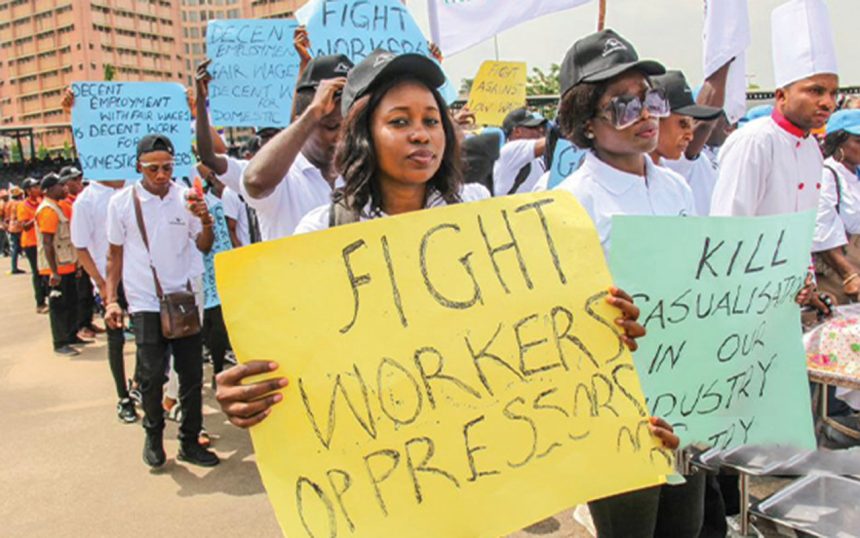
Workers and trade unions across the world marked the 2026 World Day for Decent Work on Wednesday, October 7, under the theme, “Young Workers Organising for the Future,” as declared by the International Trade Union Confederation.
Some young workers in Abuja, say the day has been observed annually since 2008 as a global mobilisation for fair wages, secure employment, social protection and respect for workers’ rights.
This year’s focus is on young workers. According to the International Trade Union Confederation, young workers, from grocery stores in Alberta to technology campuses in Seoul and markets in Abuja, are leading a new wave of union organising and strikes to demand fair pay.
The Confederation said the theme highlights the challenges facing young workers and the collective actions helping them secure better working conditions at a time when democratic and labour rights are under pressure worldwide.
In Abuja, some young workers shared their expectations on the occasion of World Day for Decent Work.
The International Labour Organization reports that global youth unemployment rose to 12.4 percent in 2025, leaving nearly 67 million young people aged 15 to 24 without jobs.
In Canada, Unifor reports youth unemployment at 12.9 percent, double the national average, while in Nigeria, the National Bureau of Statistics continues to put youth unemployment and underemployment at over 40 percent, amid precarious gig work, low wages and the rising cost of living.
In a statement released for the 2026 World Day for Decent Work, the General Secretary of the International Trade Union Confederation, Luc Triangle, said young workers are bearing the heaviest burden of today’s economy, facing insecure contracts, mounting education debt and an affordability crisis that makes building a decent life increasingly difficult.
In Abuja, the Nigeria Labour Congress and Trade Union Congress joined their affiliates to commemorate the day with a webinar titled “Young Workers Organising for the Future,” featuring five young trade unionists from different regions who shared their experiences in building collective power.
Labour leaders used the occasion to call on the government and employers to invest in stable, well-paid jobs, skills development and training, and to end casualisation, which has become common in banks, factories and the creative industry.
The commemoration comes at a crucial time for Nigeria’s Orange Economy.
Creative workers, riders, point-of-sale operators and digital freelancers who drive the informal economy are demanding inclusion in the Decent Work Agenda, including fair pay, health insurance, pensions and protection from exploitation.
The Nigeria Labour Congress says decent work must provide a fair income, workplace security, social protection for families and equal opportunities for women and men.
For millions of young Nigerians entering the labour market, the message of this year’s World Day for Decent Work is clear: decent jobs are not a privilege but a right, and young workers must organise, make their voices heard and help shape the future of work.
(Follow AIT News on WhatsApp, AfricaIndependentTV on YouTube, ait_online on Facebook and X (Formerly Twitter), and officialait on TikTok, Instagram and Threads)
Editor: Ada Ononye