The disagreement between Nigeria’s aviation agencies over the sharing of the statutory five per cent Ticket Sales Charge (TSC) got the attention of the National Assembly on Thursday at a public hearing organised by the House of Representatives Committee on Aviation
The hearing, which considered proposed amendments to the Civil Aviation Act, 2022, and the Nigerian Airspace Management Agency (NAMA) Act, exposed deep divisions over the funding structure of the aviation sector.
While the Nigerian Airspace Management Agency, NAMA, called on the National Assembly to increase its share of the statutory five per cent aviation revenue pool from the current 22 per cent to 56 per cent, the Nigerian Civil Aviation Authority (NCAA) opposed any reduction in its share, insisting that the regulator relies heavily on Ticket Sales Charge to perform its statutory oversight responsibilities
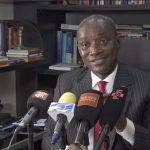
Managing Director of NAMA, Farouk Umar, in his presentation, explained that the existing revenue-sharing formula no longer reflects the scale of the agency’s statutory responsibilities or the financial burden of keeping the nation’s airspace safe.
Umar, while warning that the rising cost of maintaining safety-critical infrastructure is putting increasing pressure on the country’s air navigation system, pointed out that the safety of the aviation sector depends on strong and adequately funded institutions.
The Managing Director who told the Committee that the cost of keeping Nigerian airspace safe had outgrown the existing funding formula, said the agency recorded a total cost profile exceeding 43 billion naira in 2023.
On his part, the Director-General of Civil Aviation, Capt. Chris Najomo said that although the NCAA supports adequate funding for all aviation agencies, any redistribution must be in line with International Civil Aviation Organisation (ICAO) standards.
Najomo argued that NAMA already generates significant commercial revenue from air navigation services, unlike the NCAA, adding that aviation safety depends not only on legislation but also on competent inspectors, effective surveillance, continuous certification, technical training, international cooperation and a financially independent regulator.
The African Aviation and Aerospace University (AAAU), Abuja, also asked the National Assembly to include it as a statutory beneficiary of the five per cent Ticket Sales Charge (TSC) and allocate not less than 10 per cent of the revenue to the institution for aviation manpower development, research and innovation.
MUST READ: ARCON Advertising Industry Colloquium 4.0
Acting Vice-Chancellor of the institution, Mustapha Abdullahi, while presenting the university’s position, stressed that AAAU occupies a unique position in Nigeria’s aviation ecosystem as the country’s specialised federal university dedicated to aviation, aerospace and allied disciplines.
House Speaker, Tajudeen Abbas, who was represented at the hearing by Sada Soli, reiterated the 10th Assembly’s commitment to strengthening financial framework of the country’s aviation industry towards enhancing the capacity of aviation agencies to effectively manage and safeguard Nigeria’s airspace to ensure investors confidence in the industry.
The committee chairman, Abdullahi Garba, assured stakeholders that the National Assembly will resolve the disagreement between the two major government agencies.
He commended the various stakeholders for their contributions towards the safety and development of Nigeria’s aviation sector, noting that the bills are aimed at strengthening the financial and institutional framework of the aviation industry, with direct implications for safety, transparency and service delivery.
(Follow AIT News on WhatsApp, AfricaIndependentTV on YouTube, ait_online on Facebook and X (Formerly Twitter), and officialait on TikTok, Instagram and Threads)
(Editor: Ebuwa Omo-Osagie)